Search

Tampilkan postingan dengan label noodles. Tampilkan semua postingan

Kamis, 19 September 2013

Chef Lagenda

P1100361

I don't know about you, but often when I enter a Malaysian restaurant, the first thing that comes to mind is bingo.  See, you walk in and everybody is just head down, eyes on the prize (be it that slippery last prawn in the laksa or that elusive "legs eleven").  When you finally surface, it may be with a big contented sigh, not a shout of "bingo!" - but the buzz afterwards is just as good.

P1100360

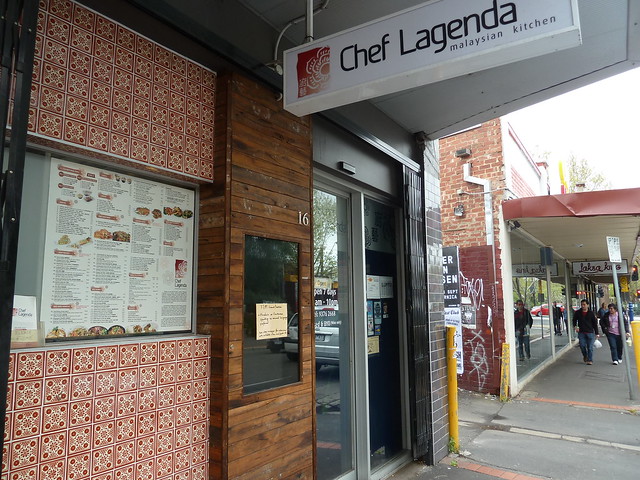
At least that's what we were chasing when we popped into Chef Lagenda for a quick and tasty lunch.  This skinny-fronted restaurant is neighbours with Laksa King, probably Melbourne's most famous Malaysian restaurant.  There's a lot of mythology about the relationship between the two, with stories about chefs or staff decamping between the two, but let's just say Flemington is spoilt when it comes to Malaysian options.

P1100364

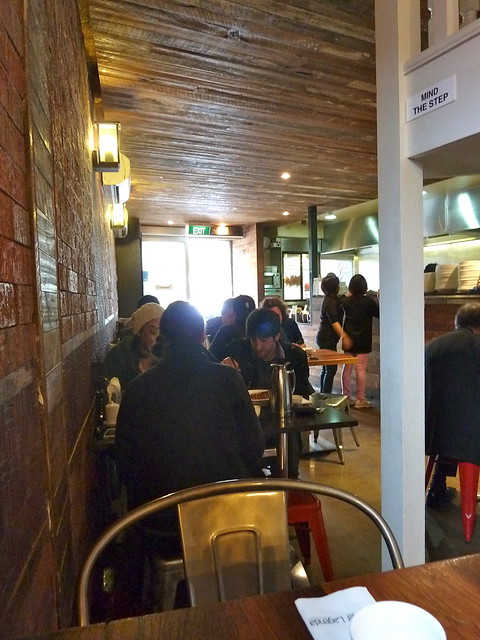
It's a funny, slightly poky setup inside - almost like a skinny Victorian has had all its walls pulled out and been converted into a restaurant.  From memory there's a semi-enclosed courtyard upstairs.

P1100366

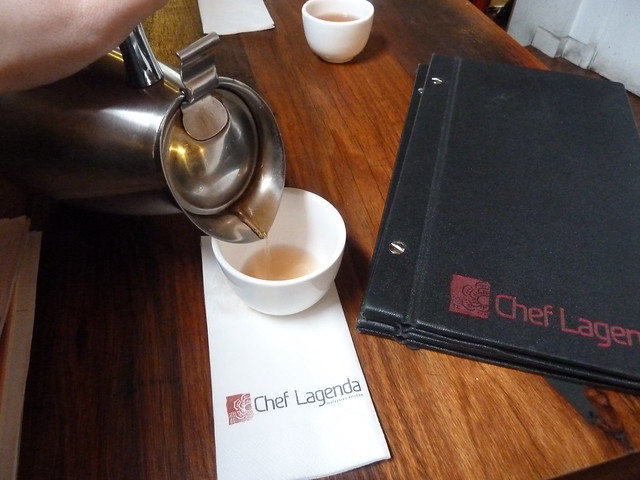
Warm, slightly astringent Chinese tea comes standard.  Lagenda's got a mammoth menu, but if you want something really authentic, skip the chicken and cashews and flip to the stir-fried noodle and noodle soup sections for hawker classics.

P1100370
Fried noodles with egg sauce, $11.20

This is one of my favourite Malaysian dishes.  It's usually called "wat tan hor".  Wide flat rice noodles are tossed with a little soy in a searing wok, given them a special smoky taste.  Next, rather peculiarly, they're completely covered with a very thick, starchy gravy mixed with beaten egg in which hovers prawns, fish cake, a few bits of veg, maybe some chicken and other good things.  I'll be the first to admit it looks like a dog's breakfast, but the taste is hot diggity dog.  The secret is getting the noodles infused with LOTS of smoky "wok hei" (the special hot work taste), otherwise it all just tastes gluggy and awful.  Maybe a touch more wok hei in Lagenda's version wouldn't have gone astray, and some of the egg pieces were a bit chunky, but it was a pretty good rendition nonetheless.

P1100374
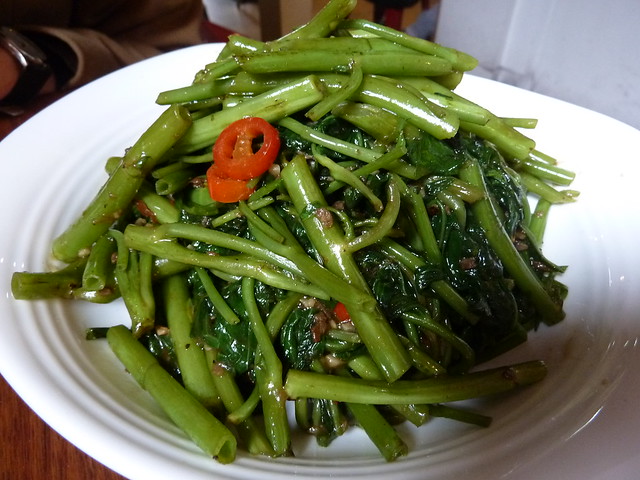
Sambal kangkung, $14.50

This sambal kangkung was disappointing, though.  Maybe it's a seasonal thing but the kangkung (a spinach-like aquatic vegetable) was slightly tough and woody.  The sambal was a bit flat in flavour, rather than being its usual slightly sweet and hot self.  Oh well.

I've had quite a few really good meals at Lagenda.  Their laksa is delicious, as is their salted fish and chicken fried rice, and I've had a good smoky char kway teow there too.  Next time you're lining up to pay your respects to the King, consider giving Lagenda a shot instead.

Chef Lagenda on Urbanspoon

Chef Lagenda
16 Pin Oak Cr, Flemington (9376 2668)
Second store at Shop 9/10, 835A Ballarat Rd, Deer Park (8358 5389)

Senin, 11 Maret 2013

Walnut Mushroom Casserole Recipe


When I was growing up, my parents took me and my sister to all kinds of restaurants but rarely ones with "kid's menus." We regularly came into San Francisco to eat Chinese food, tried sushi long before it became popular, and celebrated birthdays and school graduation at fancy French restaurants. Unlike many kids who probably longed for Taco Bell or McDonald’s, I enjoyed eating at  The Good Earth, a casual restaurant near my house. The menu had a mix of salads and sandwiches and some very unique entrees. It wouldn’t necessarily be considered “health food” by today’s standards but there were quite a number of vegetarian dishes. 

At The Good Earth, pretty much anyone could find something they would like to eat, and that made it perfect for dining out with everyone from my teenage girlfriends, to my grandmother. The Good Earth was famous for it’s spicy cinnamon tea which you can buy to this day. Although the restaurant chain was sold and very few restaurants remain, I remain haunted by the memory of Walnut Mushroom Casserole. It was my go to dish.

I like to think of myself as fairly adventurous, but really, when I find one dish I love, I have a hard time straying beyond it on any menu. The Walnut Mushroom Casserole at The Good Earth restaurant was my absolute favorite. It’s still on the menu at just one remaining restaurant in Southern California. Here is the dish description:

Walnut Mushroom Casserole spinach fettuccini tossed with broccoli, mushrooms, onion and water chestnuts, blended with sour cream and sherry sauce. topped with two cheeses, walnuts and scallions

I found a recipe online but it didn't seem right to me, so I adapted it as best I could to fit with my memory of it.  I used Al Dente spinach fettuccini and it was perfect. I also tested out Al Dente's bonachia spinach fettuccine, and that worked great too. Note: Do not overcook the pasta! 


Walnut Mushroom Casserole
Serves 6 

Ingredients

2 Tablespoons olive oil, divided
1 cup walnuts, coarsely chopped
1 medium onion, cut into quarters and thinly sliced
1/2 lb small button mushroom, halved or quartered into small chunks
3 cups thinly sliced broccoli, stems and bite-sized florets
8 ounce can sliced water chestnuts
1 clove garlic, minced 
2 Tablespoons sherry
2 Tablespoons soy sauce
1/2 cup + 2 Tablespoons sour cream
6 ounces dry spinach fettuccini (such as Al Dente brand), cooked until barely tender
1 cup shredded monterey jack cheese
1 cup shredded cheddar cheese

Instructions

Preheat oven to 375 degrees.

Heat a large skillet over low heat, add walnuts and stir until lightly toasted and fragrant, then remove and reserve the nuts and return the skillet to the stove.

Add one tablespoon oil to the hot skillet and the onions and mushrooms and cook until just beginning to brown, remove with a spoon and reserve. Add the remaining tablespoon of oil to the pan and the broccoli and sauté until crisp-tender, about 8 minutes. Stir in the reserved onions, mushrooms, water chestnuts, garlic and spinach fettuccini. Remove from heat and add the sherry, soy sauce and sour cream. Stir gently to coat without breaking the noodles

Place mixture in a greased, shallow 2 1/2 quart baking dish. Sprinkle evenly with the reserved walnuts and then the cheeses. At this point the casserole can be refrigerated for up to 2 days. Bake until cheese melts and casserole is heated through, about 15 - 20 minutes. 

Note: you can bake the mixture in any type or combination of casserole pans you wish. If you use large individual ramekins,  bake only until the casserole is hot and the cheese melts, about 10 minutes. 

Enjoy! 

Jumat, 08 Februari 2013

Dan Dan Noodles Recipe


I love Chinese food but I rarely make it at home. I have a few favorite recipes, but I am definitely interested in trying more so I was thrilled to see Fuchsia Dunlop's latest cookbook, Every Grain of Rice which focuses on simple Chinese home cooking. I like the book, my only complaint is that sometimes more explanation of certain ingredients would be helpful; for example in my local Chinese markets I can find lots of different noodles, but some of the recipes just say "wheat noodles" or when I see an ingredient like celery I wonder, should I use conventional celery or Chinese celery? 

I made a dish I adore and which is featured on the cover, Dan Dan noodles. While I have certain ingredients like both dark and light soy sauce, Chinkiang vinegar and Shaoxing wine in order to make this particular dish I went ahead and purchased some sweet fermented sauce and embarked on a search for find ya cai. Ok, this is where is gets complicated. I searched high and low at every Chinese grocery store I could find and there was no ya cai, a kind of preserved mustard green. In fact one store told me they hadn't carried it in a long time despite requests from restaurants. I did find lots of other preserved vegetables and Tianjin preserved vegetable another kind of salt pickled cabbage with garlic which I used instead. It's a delicious savory vegetable that adds a really nice texture to dishes and is fairly easy to find. 

I adapted the recipe just a tiny bit, I didn't think the oil was necessary for frying the ground pork because it is so fatty anyway and of course, I had to substitute Tianjin for ya cai. I am going to keep looking for ya cai, but I am very happy to have discovered preserved vegetables and now that I have purchased several kinds I will be experimenting with them. They are inexpensive, come in many different varieties like turnip and cabbage and mustard green stems, and if you like salty picky flavors they are very appealing!

Note: if you can find ya cai by all means use it

Dan Dan Noodles adapted from Fuchsia Dunlop
Makes 2 large servings

1/4 lb ground pork (I used  fatty not lean)
2 teaspoons Shaoxing wine
1 teaspoon sweet fermented sauce (also called sweet bean sauce)
1 teaspoon light soy sauce
11 ounces fresh wheat noodles, medium thickness (not the very thin or wide ones)
3/4 cup chicken broth
2 teaspoons light soy sauce
1 teaspoon Chianking vinegar (also called black rice vinegar)
3 Tablespoons chili oil or to taste
5 Tablespoons Tianjin preserved vegetables  (Tianjin is often available in a squat brown ceramic pot)
1/4 cup sliced green onions, divided

Heat a wok or large non-stick skillet over medium heat. Add the meat and cook, stirring to break it up. When the meat is cooked, add the Shaoxing wine and the sweet fermented sauce and stir to combine. Cook until fragrant, but still juicy. Remove from the heat and set aside. 

Heat the chicken broth in a pan or microwave, then add to a large serving bowl. To the broth add the soy sauce, Chianking vinegar, chili oil, the Tianjin preserved vegetables and 3/4 of the green onions. 

Cook the noodles then rinse and drain. Toss the noodles with the sauce and top with the meat mixture and the reserved green onions. 

Enjoy! 

Disclaimer: I received Every Grain of Rice as a review copy, this post includes an Amazon affiliate link

Kamis, 20 September 2012

Hand-made soba noodles at Shimbashi

Disclaimer:  I attended Shimbashi Soba as a guest of the proprietor.  Please see end of post for full disclosure.

What are your recipe deal breakers?  Will you stuff, bone and truss, or are you a chicken shop boy/girl?  (I confess I'm the latter.)  Do the terms "soft crack" and "hard ball" freak you out?  (They're used in confectionary making, you dirty person, you.)  I know for me, a terrible afternoon with a bowl of dough, a slow-press juicer, a vapid instruction manual and a clothes horse festooned with claggy strips of home-made fettuccine meant that I will never, ever attempt to make my own pasta again.  Same goes for noodles.  And anyway, why bother, especially when we have so many wonderful specialty noodle shops to choose from?

P1050530

Shimbashi Soba has recently opened in Liverpool Street, Melbourne and specialises in making soba noodles from scratch...and I mean scratch.

P1050599

The noodles begin life as Tasmanian buckwheat kernels (grown chemical free) which are ground in house daily on a slowly turning millstone.  The freshly milled flour is then mixed with a small amount of wheat flour before being kneaded, rolled and chopped just hours before service.  With the exception of the miling, the production is totally non-mechanised, with Chef Taka Kumayama rolling, folding and - with eerie precision - cutting the buckwheat noodles into uniform lengths with an imposing steel blade.  You can catch him in action in the window of Shimbashi between about 10 and 11am, and again in the afternoon if there's a soba rush at lunch.  (Check out this pictorial of a soba noodle workshop in Tokyo.)

P1050602

I've tried to make soba from packaged, dried noodles in the past but it's never been very nice, the dried noodles turning soft and claggy very fast.  It was the chance to try hand-made soba that piqued my interest when contacted by Chef Taka's lovely friend and ex-colleague Harumi, who is helping with the PR for his new Melbourne venture.

P1050558
Agedashi tofu, $8

I love going somewhere and just saying, "Feed me food".  The Japanese have a word for it - omakase, which means you're in the chef's hands.   We couldn't resist making some suggestions as well, though!  This agedashi tofu was good - it's a deliberately benign dish, the neutral, slightly savoury tofu in harmony with mild dashi-based dressing.  Loved the touch of very authentic grated daikon on top.  More bonito flakes though please!

P1050563  
Oysters, $2.50 ea

Aren't these gorgeous - like little ikebana flower arrangements!  Loved these oysters with their lip-smacking yuzu citrus dressing.

P1050553
Echigo beer, $15/500 mL bottle

Shimbashi have an impressive Japanese drinks menu with interesting sake and plum wines.  This beer, made with short-grain sushi rice, was utterly crisp and delicious.

P1050564
Sashimi, $16/14 pieces)

Anyone who eats with a food blogger knows their meal is not their own for at least 30 seconds after arriving on the table.  I'm not as "bad" as some - one friend has been known to commander your lunch, carrying it off to a sunlit windowsill for a photoshoot before you're "allowed" to tuck in!  It's telling then that I was so excited when this arrived, for the first time ever I had to be reminded to take a photo. This sashimi was divine.  Getting away from the salmon/tuna/something white tired triumvirate, we had Tasmanian ocean trout, sand marlin and classic, rosy tuna.  This combo changes daily according to what the chef finds at the Vic Market.  Sublime.

P1050570

"Ooh, lovely!" we exclaimed on being presented with this little dish.  We should have stopped right there and tucked in, but I had to ask, "What is it?"  Turns out it is fish eggs and milt or fish sperm sacs!!!  Apparently Chef Taka found a lovely pair of striped jack, a kind of mackerel, at the market that morning, from whence these delicacies came.  So we stared.  We spun the bowl.  "I don't think I can do it," said my friend.  But we did, and boy was it good.  The eggs (on the left) had a grainy texture and a not unpleasant fishy taste (like tuna), but the fishy boy parts (shirako) on the right were delicious - smooth and buttery, not unlike pate or brains.  Definitely the strangest thing I've eaten all year, and probably the most surprisingly delicious!

P1050574

This is a new discovery for me (thanks K!) and I LOVE it.  It's called nigorisake and it's sake (or rice wine) that is unfiltered, leaving it with a creamy, viscous texture not unlike drinking yoghurt.  It's served chilled and is delicious, both sweet and tart at the same time.  If you want some street cred, try ordering this next time you go Japanese - it's relatively unknown and boy, is it YUMMY.

P1050579
Tempura (normally served with soba, $16)

Delicious tempura, featuring Aussie prawns from the Vic Market, eggplant, broccoli and other vegies.  It was served on paper as is traditional, to demonstrate the chef's skill in making it non-oily.

P1050584
Seiro soba, $10

The grand finale!  Soba can be served hot or cold but this is the most traditional way.  The noodles are served chilled on a traditional mat (once upon a time, soba noodles were steamed on a mat like this).  Under the bowl of spring onion is a small cup.  A thin, soy-based, ever so slightly bittersweet dressing (tsuyu) is poured from the small jug into the cup, and each chopstickful of noodles is swizzled briefly before being guzzled up.  The idea is to "haul in" the noodles quickly without having to bite them off.  Slurping is not considered impolite and heightens the sensation of silky soba entering your mouth.  The noodles have such a distinct, earthy flavour - delicious.  I love the ritualistic way of serving and eating too.

P1050590

Soba have vast health benefits including being very high in protein and various polyphenols and bioflavenoids.  The broth soba are cooked in is very nutritous and it is traditional to mix a little with the leftover dipping sauce for a final drink.  This was delicious, balanced and soothing.

P1050596
Matcha green tea ice cream, $4

LOVED this - house-made green tea ice cream, ever so slightly bitter and with an intriguing graininess (from the finely milled matcha or green tea).  It married perfectly with soft, sweetened adzuki or red beans.  YUM.

taka

Here's Chef Taka Kumayama with his stone-based buckwheat flour mill.  The Shimbashi "brand" has a history that warrants explanation.  A chef named Yoshinori Shibazaki opened the first soba bar in Sydney in 1994, committing to making soba traditionally and later, grinding his own flour.  Success led to a partnership with a Singapore company, R E & S Enterprises, and Shimbashi Singapore was opened in 2003.  Chef Taka (above) had been making soba in Sydney for "Soba Master Shibazaki", as he is known, and he was then sent to oversee operations in Singapore.  Mr Shibazaki has now moved back to Japan, having sold his Sydney business and later opening and also selling another soba bar on the Gold Coast.  Chef Taka has now migrated to Melbourne, owns this restaurant independently and, due to his longstanding association with Mr Shibazaki, has been given his blessing to continue using the same traditional methods and recipe as the original Shimbashi restaurant in Sydney.

P1050537

So come for the soba and stay for the unique sake and well-made Japanese fare.  I know there are plenty of good Japanese places in town, but the soba really makes Shimbashi stand out.  The interior, while unpolished to a degree, is quaintly charming in its homeliness.  Chilled soba, sashimi and sake in the peaceful laneway on a hot summer evening sounds like a definite plan.

Chef Taka is very focussed on good ingredients and it shows - his signature dish, warm soba noodle soup and duck is coming soon.  Speaking of recipe dealbreakers, anything involving duck is another one of mine, so duck and hand-made noodles sounds like a most delicious plan!

Shimbashi Soba & Sake Bar on Urbanspoon

Shimbashi Soba
17 Liverpool Street, Melbourne
Hours:  Mon-Fri 11.30am-2pm, Mon-Sat 6-10pm (last orders 9.30pm).  Closed Sunday.

Disclosure:  I attended Shimbashi as a guest of Chef Kumayama, which means a guest and I did not pay for our meal or drinks.  We left it up to the chef to design our meal but we selected our own drinks.  This offer was not conditional on subsequently writing a post.  Shimbashi has not sought nor been given any editorial control of this post.


View Footscrayfoodblog reviews in a larger map

Kamis, 09 Agustus 2012

Duck and Mango Soba Salad

Duck and Mango Soba Salad
Duck and Mango Soba Salad is a big bowl of deliciousness--slithery noodles, succulent roast duck, juicy mango slices and vibrant green herbs. The dressing relies on just a few pantry staples. Asian pantry staples that is. I recommend you keep on hand six basic items--Chinese chili garlic sauce, soy sauce, rice wine vinegar, sesame oil, miso and coconut milk. You can expand that list as you see fit. I always have various types of soy sauce and Chinese vinegars, oyster sauce, fish sauce, hoisin sauce, Mirin, Chinese sesame paste, shelf stable packages of tofu, Asian noodles and some Thai curry pastes. A few pantry staples, a stop to pick up a duck at a Chinese deli and a swing through a produce market and you're on your way to making Duck and Mango Soba Salad!

I shop on Clement Street frequently because there are lots of produce markets with a variety of fruit and vegetables I can't find elsewhere (such as Chinese greens and fresh lychees) shops where I can find dim sum to-go and Chinese delis. I know some people like rotisserie chickens, but I prefer Chinese roast duck. Where I live in San Francisco they cost about $12 for a whole and $7 for a half duck. Roast duck is about as versatile as rotisserie chicken but so much tastier and not expensive.

This week I bought some firm green mangoes for a dollar a piece. You don't have to wait until a mango is soft to use it. In fact, some dishes are better if you use a firmer, less ripe mango. This is one of those recipes. If your mango gets very soft, scoop the flesh from the skin and pit, and freeze the pulp. It's great in smoothies, ice cream and baked goods.

Note: Test the noodles before the package instructions indicate they are done.

Duck and Mango Soba Salad 
Serves 4 as a main dish

Ingredients

6 Tablespoons rice wine vinegar
2 teaspoons brown sugar
4 teaspoons soy sauce
1 teaspoon Chinese chili garlic sauce (please tell me you have this, if not, you need it)
1 teaspoon toasted sesame oil

1 7 - 8 oz package buckwheat or cha green tea soba noodles
1 cup Chinese roast duck sliced
1 large firm mango, sliced into matchsticks
4 green onions, slivered
1/2 cup cilantro, chopped or more to taste

Instructions

Whisk the first five ingredients together until sugar is dissolved.

Cook the soba noodles al dente according to package directions. Do not overcook! Once cooked, drain, rinse, and place in a large mixing or serving bowl.

To the soba noodles add the duck, mango, green onions, and cilantro. Add dressing and toss again before serving.

Enjoy!

Selasa, 10 Januari 2012

Noodle Kingdom

noodle kingdom

Street theatre - statue people, pan pipers, pavement chalk artists and now, noodle makers!

P1030412

Noodle Kingdom, originally of Preston, is probably best known for its handmade noodles.  In late 2010, their Russell Street store was slammed with an enormous fine for multiple food safety breaches.  Undaunted (and hopefully with some better food handling practices and/or more monitoring), they have remodelled Swanston Street's Chinatown Dumpling Restaurant into a reportedly six-storey pagoda paying homage to floury delights.

P1030425

The dining room is far removed from other function-over-fancy establishments.  A banquette lines one wall, making for comfy reclining.  High above the room at the bank, a dumpling maker in pressed white hat watches benevolently over the room full of marble tables, lit by lantern-like lights.

P1030426
Chicken, prawn and pork dumplings, $6

These look the business but golly, what thick skins.  They were thick to the point that the dumplings almost seemed like buns - we're talking half a centimetre thick here.  The filling was tasty but not all that juicy.

P1030428
Dry-fried french bean, $14.80

These were all right, not the best I've had.  The mince was quite coarse and there was little flavour other than soy sauce.  Vegetarians, always beware this dish as the menu description rarely mentions the pork mince it is flavoured with and it's often filed under "Vegetables".

P1030430
Stir-fried chicken with nuts and veg (hand-made broad noodle base), $16.80

My sister had gone here with a group of about 10 and everyone unanimously agreed her choice, above, was the best.  Say no more!  This was indeed pretty unreal.  The noodles were fantastic, wide and flat like fettuccine, with unparalleled al dente bite and seductive slipperiness.  I think the chicken chunks were deep fried.  Peanuts gave lots of fabulous crunch and we loved the mild heat of the fat red chillies.  Moistened with a little soy, it was a great dish.

So far, the noodles are the drawcard here for me.  There are many different shapes and styles to try, including in their beef noodle soup which is apparently a specialty.  The decor is quite lovely (although the toilets were filthy) and big points for Mountain Goat and Little Creatures beers on offer.  With Noodle Kingdom opposite the fantastic Dumplings Plus and the buzzing Taiwan Cafe, Asian food on Swanston Street is starting to get exciting!

P.S.  Sooper-dooper new comment system now installed where I can reply to your comment in a "thread" so no more of that cumbersome "Bob - yes!  Sarah - absolutely!" old Blogger style replying.  You can also sign in with Facebook and Twitter.  (If you log in via Facebook, click "Don't Allow" when it says Footscray Food Blog wants permission to post as you.  I don't want that at all but don't know how to disable it!!)


UPDATE:  Had to uninstall less than sooper-dooper comment system - it flicks back to Blogger comments occasionally it seems and if someone comments through that, it deletes all the new comments in the new system.  *sigh*  Hopefully I can find another program that's more consistent.


Noodle Kingdom on Urbanspoon

Noodle Kingdom
264 Swanston Street, Melbourne
Phone:  9650 1818
Hours:  Daily lunch and dinner


View Footscrayfoodblog reviews in a larger map

Rabu, 02 Maret 2011

Brussels Sprout & Leek Dumplings Recipe

Brussels Sprout & Leek Dumplings
Do you know the difference between dumplings and ravioli? The secret is the pasta, and it occurred to me when I was creating this recipe. To make ravioli you use pasta dough, which, while silky is still toothsome (al dente). Dumplings can use any kind of dough, including slick wonton skins, which are most definitely not toothsome. Of course there are some exceptions to this rule. I've had some very silky udon noodles lately that use soft, slippery noodles and I've had potstickers which definitely use thicker, chewier dough.

I used to make fresh pasta but I'm too lazy these days, instead I've been experimenting with using wonton wrappers. In the past I used the wrappers to make Afghani leek dumplings called aushak. This time I made dumplings in a similar way, but filled them with a combination of brussels sprouts, leeks, green onions, a bit of garlic and parmesan. Many kinds of ingredients or even leftovers can go in wonton wrappers to make delicious dumplings--meat, cheese, mashed roasted vegetables. Another one of my favorite ways is to fill wonton wrappers is with mashed potatoes. I boil the dumplings and then serve them with butter or sour cream for a quick comforting meal. I even make a simple samosa by mixing mashed potatoes with peas and spices then lightly oiling the dumplings and baking them.

If you haven't tried using wonton wrappers before, or have only used them for making wontons, my advice is, experiment! You can make a filling of your choice then make just one dumpling or two to test and see how you like it. If you make a big batch, freeze them in a single layer on a baking sheet then transfer to a ziplock bag and they'll keep in the freezer for months.


Brussels Sprout & Leek Dumplings42 dumplings

Ingredients

2 teaspoons oil
2 garlic cloves, minced
2 cups leeks, green and white parts, shredded
2 cups brussels sprouts, thinly shredded
2/3 cup, about 4 green onions, thinly shredded
2 Tablespoons Parmesan cheese
Pinch freshly ground nutmeg and black pepper
Wonton wrappers

2 Tablespoons fresh lemon juice
2 Tablespoons extra virgin olive oil
1/4 cup chopped toasted hazelnuts
Parmesan cheese

Instructions

Heat a large non-stick pan and add the oil and garlic. Stir until fragrant, about 30 seconds, then add the leeks, brussels sprouts and green onions. Cooking, stirring occasionally until wilted, about 5-7 minutes. Remove from the stove and allow to cool slightly before mixing in the cheese, nutmeg and pepper. Taste for seasoning and add salt if needed.

To make the dumplings, line up the wrappers, bowl of filling and a small bowl with water. Place a teaspoon of the filling in the center of a wonton wrapper then moisten the edges of the wonton wrapper with water. Fold the wonton wrapper in half diagonally, making sure the ends meet. Press down firmly on the edges to seal.

Meanwhile combine lemon juice and olive oil to drizzle on the finished dumplings. Boil the dumplings in boiling water for a couple of minutes, or until they float to the surface. Drain and serve with the olive oil and lemon juice and a sprinkling of additional cheese and toasted nuts. Note: I reserve a bit of the sauteed vegetables as a garnish as well so guests have a better idea of what is inside each dumpling.

Enjoy!

Senin, 25 Oktober 2010

Red Wine Pasta with Walnuts: Recipe for World Pasta Day

Red Wine Pasta recipe
Pasta is my comfort food. It makes me happy to eat it, to cook it and even to look at it. I love all kinds of noodles from Italian to Japanese, Chinese, Vietnamese and even Spanish noodles. I love the texture and the way noodles are chameleon-like, absorbing flavors and reflecting all kinds of cultures. Noodles have something to say, whether lowly instant ramen or handmade fettuccine tossed with butter and shavings of truffle. I have written about noodles many times and am always glad to participate in anything pasta related and this time, it's World Pasta Day!

I would not stop eating pasta for any reason, but it is good to know that pasta is not an "evil starch" but actually is a slowly absorbed carbohydrate, that has a low glycemic index. That means it does not cause sugar in the blood to rise as quickly as many other foods. Studies have shown that when eaten in healthy portions, pasta does not lead to weight gain, may be beneficial for those with diabetes, may reduce the risk of breast cancer, lower the risk of Type 2 diabetes and may reduce the risk of Alzheimer's disease, prostate cancer. You can read more about it and see links to the medical research in Pasta for All.

I was looking for something new to do with pasta and I came across something not so new. It's a recipe that has been floating around in various incarnations for years. In my usual manner I looked at several recipes and mixed and matched until the recipe worked best for me. I don't want to say this recipe is weird, but cooking spaghetti in red wine gives it an unusual color and flavor. In addition to pasta, this recipe features red wine, walnuts, garlic and olive oil in it, so you can eat it for health or eat it because it tastes good! It has a very earthy and slight spicy flavor and is very pretty on the plate. The new plate by the way is from Villeroy & Boch. They sent me a couple of pieces to play with and I just love them.


Red Wine Pasta with WalnutsServes 4

Ingredients

1 pound spaghetti
3 cups fruity red wine
1/4 cup extra-virgin olive oil
4 small garlic cloves, minced
Pinch of crushed red pepper, or to taste, but don't use too much!
1/2 cup finely chopped parsley
1/2 cup walnuts, coarsely chopped
1/2 cup grated Parmigiano-Reggiano cheese, plus more for serving

Instructions

Cook pasta in a pot of salted boiling water for 2 minutes. Drain then return the pasta to the pot and add the wine. Cook over medium-high heat, stirring from time to time, until wine is just about completely absorbed, 7 to 8 minutes.

Meanwhile in a dry skillet, toast the walnuts over medium heat for 2 minutes or until fragrant. Remove toasted nuts from the skillet and set aside. Return skillet and add the oil, heat over medium. Add the garlic and sprinkle with salt. Cook over moderate heat for 30 seconds. Add the parsley, walnuts and stir for a moment or two. Add the pasta and toss then add the cheese and continue tossing until well combined and glossy. Taste for seasonings, serve, passing additional grated cheese at the table if desired.

Enjoy!

Rabu, 29 September 2010

Tean's Gourmet Crispy Prawn Chilli


I blame Celeste.  I was noodling along, quite happy with my cock sauce (aka Sriracha), when I read her delicious recipe for her mum's Mamak-style noodles.  At the end she had a picture of an interesting jar, under which she mentioned, quite glibly - "Serve with a side of sambal if wanted."  I filed the name on the jar - Tean's Gourmet Crispy Prawn Chilli - somewhere in my brain and told myself I should buy it next time I saw it.  I promptly forgot and months went past.  One day I happened upon it in D&K in Footscray, remembered, and bought it.


Crispy Prawn Chilli, where have you been my whole life?  Tiny, crunchy nuggets of fried garlic, chilli pieces, and pleasantly, just ever-so-slightly pongy prawns, bound together by radioactive red oil.  Oh, garlicky, spicy, crunchy seafood heaven!

I want to share my recipe (if you can even call it that) for fried noodles that is quick, easy, kid-friendly, but also delicious for adults, on its own or with a big turbo-charged spoonful of Crispy Prawn Chilli love on the side.


You need some noodles, either fresh or dried.  If using dried, they should be egg noodles.  Cook til al dente and drain.  If fresh, soak in boiling water for a minute before rinsing very well to get rid of the soapy taste from the alkaline water used to make them (see here).

 
Finely chop garlic and chop up whatever vegetables you have.  If you do not have children snapping at your heels, I recommend finely julienning the vegies.  Soak some Chinese mushrooms in boiling water for 20-30 minutes, cut off the stems, and slice them up too.  I recently learned the best are the ones with pale tops, crisscrossed with darker brown (i.e. not the ones I have in this photo!)


Heat a wok or frying pan to very hot before adding a generous amount of oil.  Allow to heat and throw in chopped garlic.  Add vegies.  Fry for 3-4 minutes.  Add noodles.


Add a couple of shakes each of light soy sauce and fish sauce as well as about 1/2 a tablespoon of white sugar.  Toss, toss, and toss for a few more minutes until noodles are nicely coated with sauce, vegies are cooked, and everything tastes yummy.


Anoint with a big dollop of crispy prawn crack before inhaling.  Oh, so good.

Now, having tasted this forbidden fruit, innocent dishes such as potato & leek soup or cauliflower cheese seem pale and benign in comparison.  While the rest of the family is content with cracked pepper, I find myself hunched over the kitchen bench, surreptitiously stirring spoonfuls of Crispy Prawn Chilli into my dinner.  Baked beans, spaghetti bolognese, pumpkin soup - this superb sambal complements them all!


Incidentally, the laksa paste which comes in a pouch and is also made by Tean's Gourmet is divine (though you must use chicken stock to make it up, not water as the back indicates).  I have not tried adding the sambal to Tean's laksa yet, as I fear my head will explode.

Now, if you will excuse me, I am off to indulge in my latest guilty snack - cheese and Crispy Prawn Chilli on toast.

Sabtu, 19 Juni 2010

International Incident Party - Noodles


Penny's International Incident Parties are so fun.  They're sort of culinary word-association tests - say "dumplings" or "noodles", and see the cavalcade of different associations passionate cooks tease from them.  For our last party, I was wanton with wontons.  Now, let's canoodle with noodles!

You know those lists that start, "You know you're a... when..."?  Like, "You know you're obsessed with food when you have cookbooks on your bedside table."  Or, "You know you're a blogger when you begin to regale a friend or family member with a great story, and they interrupt you to say, 'I know.  I read it on your blog.'"  Well, I want to start one with, "You know you're a mum when you can make a killer bolognese sauce."  Here in Australia, when you just can't face another uneaten dinner, pasta with bolognese sauce is every mum's little helper.  Stacked in tidy bricks in my freezer, it conceals a myriad of grated vegetables, and still elicits shrieks of joy when it appears on the table atop pasta and covered in cheese.

Sometimes it does get boring, though, and you need to mix things up.  At this party, I want to share with you our other family favourite - "Grandpa's special noodles," also known in our family as Chinese spaghetti bolognese.  This is based on a traditional recipe from Northern China of wheat noodles topped with pork mince in a sweet brown bean sauce.  Julienned or grated cucumber is added at the last minute, to make a dish that is true comfort food.

Zha Jiang Mian (Grandpa's special noodles)

Serves 3-4 people
Note: Australian tablespoons are 20 mL, not 15 as they are in the US.  Please adjust accordingly!

400g dried wheat noodles, or equivalent of fresh, e.g. lo mein or hokkien
2-3 small Lebanese cucumbers
2 Tb vegetable oil
3 cloves garlic, finely chopped
5 green onions, chopped
500g pork mince

Sauce
4 Tb brown bean sauce
2 Tb hoisin sauce
2 Tb Shao Hsing rice wine
1 cup chicken stock
1/2 tsp cornflour dissolved in 2 Tb hot water

Mix sauce ingredients (except cornflour) together and set aside.  If using dried noodles, cook in boiling water, drain, and set aside.  Grate or julienne cucumber. 

Heat a wok over high heat until smoking.  Add the oil, drizzling it down the sides.  Add garlic and spring onion and stir-fry for 20 seconds.  Add pork mince and stir-fry, constantly stirring to break it up.  Cook for around 10 minutes until done.  Add combined sauce ingredients (except cornflour).  Cook over high heat for 7 minutes.  Add cornflour and hot water mixture; bring to the boil, allowing it to thicken.  Cook for a few more minutes and serve atop cooked noodles, topped with cucumber.


I hope you enjoy one of our family favourites.  Make sure you check out all the other oodles of noodles below!
Thanks to Kate from Mommy Monologues for the "You know you're a blogger when..." line.  They all made me laugh!

Senin, 22 Februari 2010

Recipe: Pad Thai

Last post, we learned how to make our own tamarind "water" or purée.  This can be used to make tangy tamarind chutney, accented with ground cumin, perfect for dipping samosas, or any number of curries, from Ayam Sioh to Dhansak.  My #1 thing to use it for, though, is Pad Thai.  I have been using this recipe for years, although since having children, many of the ingredients have gone out the window.  A word about Pad Thai.  I have heard many unkind things about this dish over the years - that it's not "real Thai food", that it's just Chinese noodles with Thai seasonings, that it's use as a "yardstick dish" to judge a Thai restaurant is unfair.  All of this may be at least partly true - but it tastes so good, I don't care!

 
Hate prep?  Have children, and make them do it for you!


Although you may need to factor snacks into your quantities...

"Bare Bones" Pad Thai
Serves 4

1 pkt wide rice noodles (200g)
3 Tb tamarind purée
3 Tb fish sauce
2 Tb palm sugar, grated
Oil e.g. peanut, rice bran
Prawns (about 12)
Garlic - to taste
Vegetables (one large bowlful)
2-3 eggs
Chopped peanuts, perhaps 1/3 cup?


Soak noodles in hot water until al dente.  Drain and set aside.  Mix tamarind, fish sauce and palm sugar in a small bowl.


Heat a wok to smoking point.  Add oil, drizzling around the sides.  Add prawns and cook over high heat until just pink.  Remove and set aside.


Add another splash of oil and stir-fry garlic for 30 seconds.


Add veg and cook until just tender.  (Note: These should really be julienned, but the kids' knife skills have a way to go.)

Add noodles.  Mix well.


Push noodles up one side of the wok.  Add a little oil in the base, crack the eggs in and scramble lightly.  When just set, mix into the noodles and vegetables.


Add your sauce with your lovely home-made tamarind purée.  Stir-fry until well combined.  Very important: taste a noodle.  There should be a balance between sweet, sour and salty flavours.  If one predominates, correct with a little more of the others, to create a harmonious taste.  If it needs more sweetness, I just add a bit of white sugar, rather than pausing to grate palm sugar.  If you can't taste anything: add more of all three sauce elements.


Add prawns and most of chopped peanuts (reserving a little for garnish).
 

Serve, topped with peanuts (plus chopped coriander and a lime wedge if you have).  Despite all the cut corners, the home-made tamarind really lifts the whole dish.  If you rely on Thai restaurants to get your fix, or if you buy those "Pad Thai kits" from the supermarket, please give this a try - you won't look back!